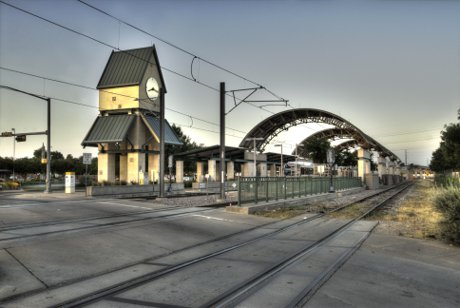
For a long time, Garland was seen as the dependable, "quiet" neighbor to the east of Dallas. But as we move through 2026, the secret is out: Garland’s real estate market is undergoing a massive revitalization, and the DART Blue Line is the primary engine behind it.
With over $18 billion in economic impact generated by transit-oriented development (TOD) across North Texas recently, Garland is leaning into its rail stations to transform aging industrial corridors into vibrant, walkable neighborhoods.
The Blue Line: Garland’s Direct Line to Growth
The Blue Line serves as the vital north-south artery for the city, connecting residents to the high-energy hubs of Deep Ellum, Downtown Dallas, and even UNT Dallas in the south. In 2026, we are seeing three distinct "mini-markets" emerge along this track.
1. Downtown Garland: The TOD Gold Standard
Downtown Garland has successfully blended historic charm with modern urban living. The area surrounding the Downtown Garland Station is the city’s most visible success story.
-
5th Street Crossing: This landmark development proved that Garland residents want a "live-work-play" lifestyle. It offers nearly 200 residential units and a satellite campus for the Dallas College district.
-
Old East Embree & State Street: As of early 2026, the city’s aggressive "land assembly" strategy is paying off. New mixed-use projects are rising to the east of the station, turning underutilized lots into luxury apartments and creative retail spaces.
-
The Vibe: It’s a favorite for young professionals who want the "urban light" experience—easy rail access to Dallas nightlife, but with the lower property taxes and community feel of Garland.
2. Forest/Jupiter: The Industrial-to-Urban Pivot
Once defined solely by warehouses and manufacturing, the area around the Forest/Jupiter Station is the current hotspot for redevelopment.
-
The Transformation: In 2026, the city is actively implementing the Forest-Jupiter Redevelopment Plan. We are seeing older industrial sites being rezoned for "flex" residential projects—townhomes and lofts that cater to the creative class and tech workers.
-
Market Insight: Because this area is still in the early stages of its "urbanization," it offers some of the best value for investors looking to get in on the ground floor of a transit-adjacent corridor.
3. South Garland Gateway: The 2026 Landmark Move
One of the biggest real estate stories this year is the massive land swap between Garland and DART.
-
The Project: The city has consolidated over 50 acres near the South Garland Transit Center and the newly improved I-635.
-
The Vision: Moving away from just being a "park-and-ride" lot, this area is being master-planned as a "Gateway" to the city. Think high-density multifamily housing, walkable retail, and entertainment venues designed to attract travelers coming off the highway and the rail.
The "Transit Premium" in 2026
The numbers back up the hype. According to a 2025-2026 study by the University of North Texas:
-
Residential Rent Premium: Homes and apartments within a quarter-mile of Garland’s DART stations are seeing rents roughly 10% higher than comparable properties further away.
-
Resilience: While some parts of the DFW market have seen inventory sit longer, transit-adjacent properties in Garland are moving 15% faster on average.
Navigating 2026 Service Changes
It is important to note that as of mid-2026, DART is undergoing some system-wide service and fare restructuring. Garland has been a proactive participant in these discussions at City Hall to ensure that the Blue Line remains a high-frequency, reliable option for the thousands of new residents moving into the downtown core.
The Bottom Line
Garland is no longer just a "bedroom community." By leveraging the Blue Line, the city is creating a series of high-value, walkable nodes that appeal to everyone from Gen Z renters to retiring Boomers who want to ditch their second car.
Find your next home near the Garland rail station with Bob McCranie at HomeSmart Stars Texas Pride Realty Group.